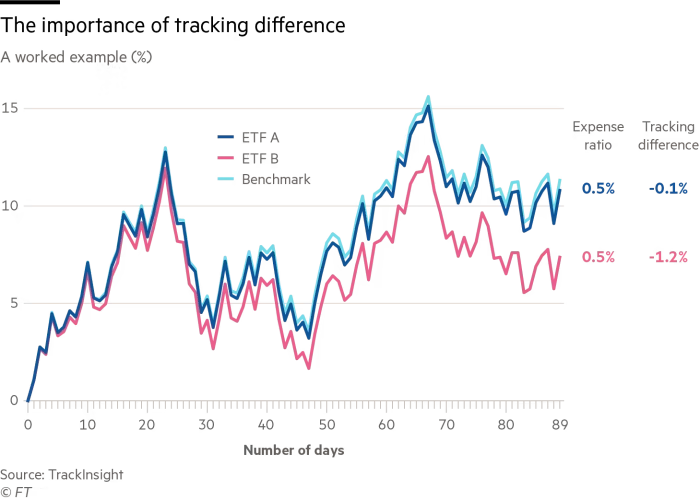
Tracking error is a term used to describe the difference between the return of an investment portfolio and the return of a benchmark index that it is supposed to be tracking. In simpler terms, it measures how closely a portfolio’s performance matches the performance of its benchmark.
For example, if a portfolio aims to track the S&P 500 index, but it returns 10% while the S&P 500 returns 12%, then the tracking error is 2%.
Why should investors care about tracking error?
Well, it provides valuable insight into how well their portfolio is performing relative to its benchmark. A high tracking error could suggest that the portfolio isn’t being managed effectively or that it is taking on too much risk.
What causes tracking error in the first place?
Several factors can contribute to tracking error, including:
Differences in investment styles: If a portfolio manager has a different investment style than the benchmark index, it is likely to result in tracking error. For instance, a growth-focused manager might deviate from a value-oriented index.
Cash drag: If a portfolio holds a significant amount of cash, it can drag down its performance and lead to tracking error. This is because cash generally earns a lower return than invested assets.
Transaction costs: The costs associated with buying and selling securities can also contribute to tracking error. Frequent trading can rack up costs that eat into returns.
Sampling error: If a portfolio only holds a sample of the securities in the benchmark index, it can lead to tracking error. This is often the case with index funds that try to replicate a broad market index.
So, how can tracking error be reduced?
There are several strategies to minimize tracking error:
Investing in index funds: Index funds are specifically designed to track a specific benchmark index, so they tend to have very low tracking error. This is a passive approach that aims to mirror the index’s performance.
Using a passive investment strategy: Passive investment strategies, such as indexing, are designed to minimize tracking error. They aim to match the market return rather than outperform it.
Minimizing cash holdings: Keeping cash holdings to a minimum can help to reduce tracking error. This ensures that most of the portfolio is invested in assets that are expected to generate returns.
Using a diversified portfolio: A diversified portfolio is less likely to be affected by the performance of any single security, which can help to reduce tracking error. Diversification spreads risk across different assets.
In conclusion, tracking error is a crucial concept for investors to grasp. By monitoring tracking error, investors can gain a clearer understanding of how well their portfolio is performing and whether it is meeting their investment objectives.
Disclaimer: The content provided by Moolah Invest is for educational purposes only and does not constitute financial advice. Investing involves risk, and past performance is not indicative of future results. Consult with a qualified financial advisor before making any investment decisions. Moolah Invest is not responsible for any investment decisions made based on the information provided.
Don’t navigate the high-risk crypto market alone. Get our simple, UK-focused guide for beginners to understand the basics, avoid common scams, and learn about your tax obligations.